


There's a score to be kept among grandparents that no one tells you when you're young. They do not tally your visits or length of stay. They are clinging onto certain moments — the afternoon you spent sitting with them long enough to hear a whole story, the day you made a meal with them that somehow didn't turn out so great, the day you asked them to teach you something they didn't bother with anymore. Memories are passed down generation to generation like that. It's the activities that are almost irrelevant. It is not what it is, but how it is.
However, those moments can occur if the right activity is created. Here are 20 things to do with your grandparents — not a list of “go on, think of ideas,” but a list of actual ideas that are useful and will appeal to different ages, mobility, and personalities.
Activities Where They Are the Expert
The one thing that is underutilized between grandparents and students is to go to the grandparents as a student. Most grandparents have a lot of skills that will not be passed on if they aren't requested. The framing here is a departure from the usual one of "you are the learner, they are the teacher," which changes the nature of the visit.
1. Learn a family recipe properly: Not the one you watch while they talk. Take a seat at the table with paper and do the writing and record each step, each measurement they take, every substitution they are making. It's a matter of documentation, not cooking. You're saving something up.
2. Ask them to teach you a vanishing skill: Sewing a button. Sharpening a knife. Interpretation of a topographic map using paper. Fixing a hem. Until the day you need them, you think the following questions are not significant, but the day suddenly arrives, and you find you don't know! Choose one skill and an afternoon and become less helpless with grandpa or grandma.
3. Record an oral history — properly: Not an "old times" sort of "tell me about the old days”. Bring 10 written questions. Ask them about their first job, the house they lived in as children, and the greatest decision they ever made and why. Make a note on your cell phone. It is not a school-based project; it is the closest thing to a time machine as there is.
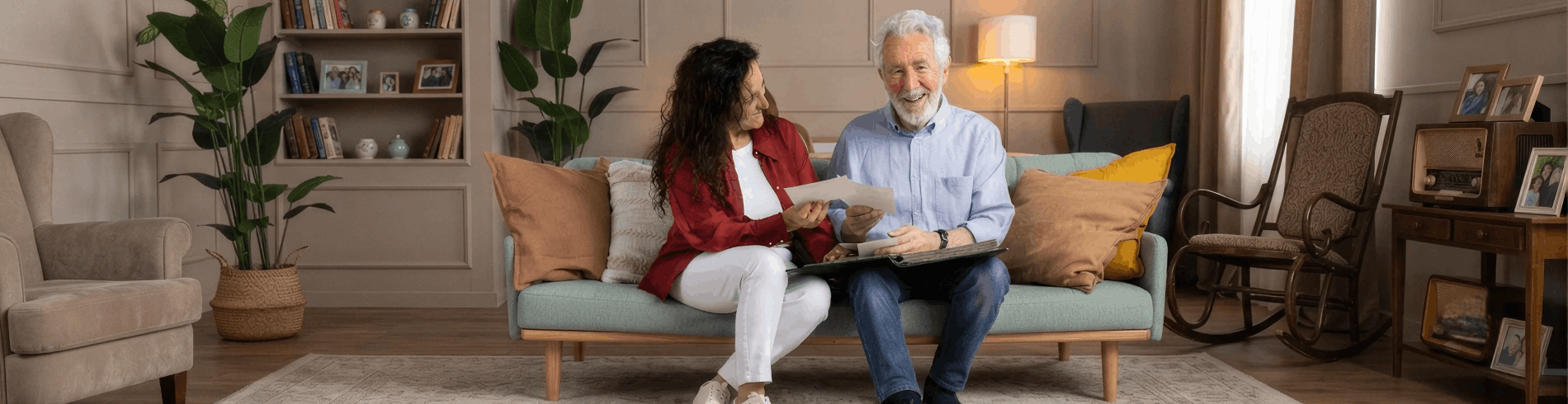
4. Go through old photographs together: Physical ones in an album or in boxes. Not just, but in combination with the act of looking at photographs: this invites conversation that no other source can. Grandparents recall things that are not in the record otherwise, such as who stood beside them and why they didn't speak, what town this was taken in, and what became of that town.
Creative Projects That Give You Something to Keep
Some of the most fun things to do with grandparents have a tangible effect; that's something that still has meaning after the time is up. These activities should be easy to explain to yourself when you are busy.
5. Build a family recipe book: Gather family recipes, print them, and write the stories behind them. An afternoon of chats, a writing project, and a treasure which grows with age!
6. Make something with your hands together: Pottery class, basic woodworking, knitting project, birdhouse. It's not important which craft, as long as you're both novices or both pros in a craft that you aren't.
7. Scrapbook a decade of family photos: Select a particular time—such as when your parent was a child, when they were young parents, in the 80s—and start creating a visual record. For better conversations, set a time limit (rather than an open-ended memory browse).
8. Write a short family history together: Two, three pages of the family history, the reason for their move, and what they left behind is worth more than just about anything you can offer a future generation. The grandparents have the information. They typically only need to be approached and asked for.
Getting Outside Without It Being a Physical Challenge
Not all grandparents are prepared for a hiking trail, and that is okay. There is a whole category of activities to do with grandparents that don't require much physical effort, but do change your surroundings and eventually conversations with them.
9. Early morning at a farmers' market: The quieter time of the day, the better produce, and the sensory environment (smells, samples, people watching) provide constant opportunities for conversation. Cook with a flexible plan and prepare something with the ingredients at hand.
10. Visit a botanical garden: Slow, beautiful, and most have nice benches at regular intervals. The best conversations occur when no one is eye-to-eye, when you are both looking at the same thing.
11. A scenic drive they direct: You drive, and they do the rest of the route. Take them to a place that once held significance for them: a neighborhood they once lived in, a road they frequently drove down, a place they haven't seen in years. The car is a good place to tell stories.
12. Attend a local historical tour or heritage walk: Most towns and cities have these, and grandparents have a lot of things that the guide doesn't: context, personal history, a family tie to a building or street. Allow them to correct the tour guide. They will enjoy it.
Fun Things That Actually Go Both Ways
A good intergenerational activity does not make the other person feel at ease. These are things to do with grandma and things to do with grandpa that you're both equally involved in.
13. A trivia night mixing both eras: Choose half of the questions from their decade, half from your decade. Nobody wins comfortably. Yes, that's the idea; it makes things even and just the right amount of competition.
14. Cook a meal from a country neither of you has been to: Pick somewhere random. Look up a recipe together online, purchase the ingredients, prepare it, and discuss the country as you work. It turns out that of all you expected it to be, it turns out to be this.
15. Watch a film from each other's favorites list: One of your watchings is theirs. You watch one of theirs. The discussion that follows regarding how things have changed in the art of storytelling, what is funny or romantic or frightening to people, is often much longer than the movie.
16. Teach each other something on a smartphone or tablet: Not patronically. An authentic exchange - they share with you how they use it, you share with them something new. Grandchildren and grandparents often come up with more warmth than competence when explaining technology.
Planned Adventures Worth the Effort
There are times to do something really out of the ordinary together, and some of the most lasting memories come from them. These are things you need to plan for, but that is what makes them relevant. The anticipation, the preparation, the retelling afterward.
17. Take a scenic boat tour or river cruise: The format is easy to access, visually engaging, and guided, so you don't have to fill all those voids. A commentary provides feedback points for you to brainstorm along with.
18. Visit a cooking class together: Not as observers. They're both a little lost, standing together, in someone else's kitchen. This usually makes people laugh more than competent, and it's just as it should be.
19. A hot air balloon flight or helicopter scenic tour: It's more accessible than most people think—more so than its perspective, quiet, and height, which are all things that most people never see. If you're the type of grandparent that likes to do things by the book, it's often better to present it as a family activity instead of an adventure.
20. Book an experience neither of you has tried: It would be here that it is worth exploring Spur Experiences. They offer a variety of adventures in their catalog, everything from cooking courses to tours of the countryside to city-slicker getaways, and it's easy to find one you're both thoroughly comfortable with and really interested in. The best shared experiences are those in which no one is doing the other any favor. You're both turning up for something new.
One Last Thing
The unity of all items on this list is not the activity, but the quality of presence that you bring to it. Grandparents can see when you are actually present and when you are there, but your mind is not. The most rewarding everyday activities with grandparents look like nothing special: Kitchen, car, walk, table with old photos.
These relationships have a different clock ticking compared to other relationships in your life. The above list is not exhaustive. A reminder that there is no time to do these things but now, and that you will remember the version of these experiences you did without looking at the phone.