


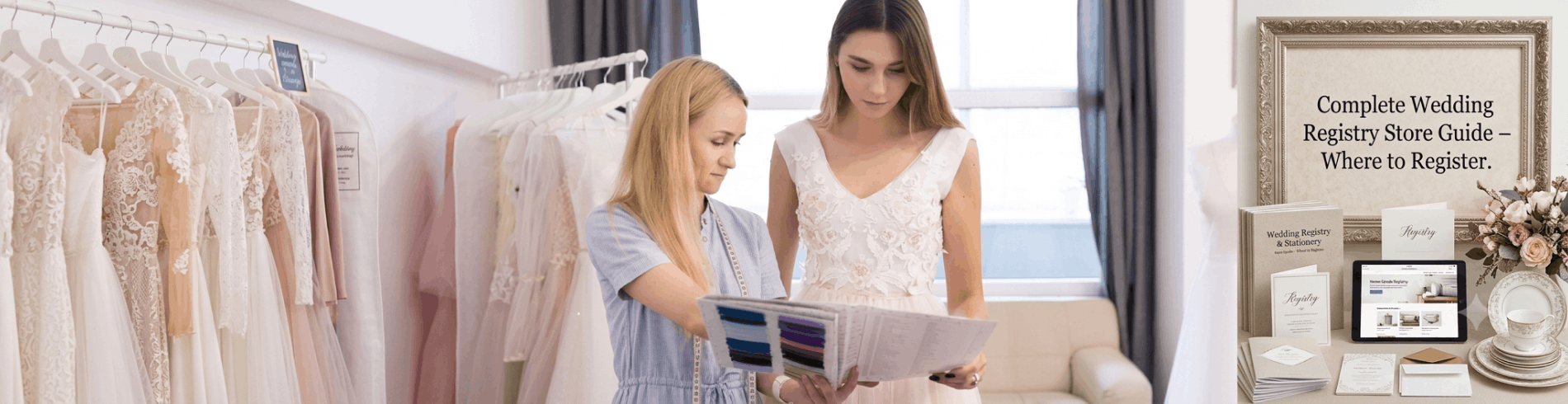
When it comes time to register for your wedding, one of those things that seems easy until you actually sit down to do it. You'll have department stores, specialty stores, online-only, universal, and experience-based stores, and the internet won't hesitate to tell you that all are the best. The reality is that there is no one-size-fits-all solution for every couple, and the online shop or platform that's a dream come true for one pair won't work for another. This guide is straightforward, explains what a true wedding registry platform comparison entails, and provides a blueprint for making a decision that's truly in line with your life.
Why Where You Register Matters More Than You Think?
Couples will spend a ton of time deciding what to include on their registry and very little time deciding where to register for the wedding. This is the wrong order of priorities. The platform you use will influence the ease with which your guests can find your list and use it, the price points you can offer, how your list will be returned and exchanged after your wedding, and whether the gifts you receive are ones you'll actually use or just ones that you liked in a product photo.
It also influences the type of visitors who actually purchase. Older family members who are used to entering a store and making a choice on a tangible product will act differently from a group of friends in their thirties who are used to ordering online at 11 pm. Just because wedding registry stores are household names doesn't mean they are the best; it's about what you need for your guests, your lifestyle, and your family's vision.
Most wedding planners recommend that they register at two to three sites to ensure that they have coverage for various rates and wedding preferences. If done correctly, this will be a good starting point for all guests without forming the list so broad that no one knows where to begin.
Department and Home Goods Stores: The Familiar Foundation
Department stores and big home goods stores are a staple reason for wedding registries, and for good reason! They have a large selection of products, a good price difference, a good return policy, and have been around long enough to be familiar to older customers. If you have a range of guests from across generations and comfort levels with online shopping, at least one of your registries will be a name recognized on the high street or in big-box stores, making the gifting process accessible to all.
What They Do Well
One of the most concrete monetary advantages of signing up with a big company is the completion discount, which is generally offered 30 to 90 days before the wedding. This means you can buy everything else on your list at a discount, and if your larger-ticket items aren't bought, it can be a big discount. The in-store registry scan events, where couples literally walk the floor with a scanner while they're building their registry, also tend to result in more well-rounded and thoughtful registries than a digital one, because you are physically interacting with the product and making instant decisions.
Limitations to Know About
The wide selection of merchandise that attracts shoppers to department stores can be a disadvantage, too. If it is not curated, a large retailer's registry can become a daunting list that is difficult for guests to follow. The best wedding registry stores in this category are those that have a specific aesthetic, such as kitchen, design-focused, or lifestyle-based, instead of being a general store that sells furniture, garden tools, and more. If you do use a large department store, follow this philosophy: focus on developing a curated, well-edited list instead of just adding every item you see.
Specialty Retailers: For Couples With a Clear Aesthetic
Couples with a clear idea of the home and lifestyle they want should think of specialty stores, such as kitchen retailers, design-led home goods stores, and outdoor and travel retailers. For special life scenarios, these are some of the best wedding registry stores: the couple who is a serious cook, the couple who hosts friends and family often, or the couple who cares more about quality than quantity in all categories.
The price of this is accessibility. Specialty retailers stock a limited range of products and have a specific audience, which means some members of your audience may feel perfectly at home in the specialty store, while others may find the price or style awkward. When booking with a specialty retailer, use a site with broader price options to ensure guests do not have to sacrifice on price.
One other good thing about specialty stores is that they have an in-depth understanding of their products. For kitchenware, for instance, you can walk through the store with someone to help you understand the differences between products, which a digital registry doesn't really provide. It is less likely that you will add items you don't understand and less likely that you will end up with duplicate items in your collection.
Online-Only Registry Platforms: The Modern Aggregator
Modern couples' weddings have revolutionized how weddings are registered, thanks to the emergence of top wedding registry websites designed specifically for modern couples. Couples can include items from almost any online store they like in a single list, along with cash gifts and group gifting options, on platforms like Zola, MyRegistry, and others. This is the most flexible format available and a true representation of today's reality, where most couples don't build their entire home from a single store.
But from a wedding registry platform comparison perspective, digital-first platforms definitely have an edge in flexibility, guest user experience, and feature depth, especially for cash funds, honeymoon contributions, and giving to charity, which are poorly handled or not offered by traditional retail stores. Some online retailers may not offer the same level of completion discount or may not offer it at all, so be sure to check before you invest.
One major problem with all-digital registries is that they can get cumbersome. There's a flattering impulse to add as much as, well, you can when you can add it from anywhere, and when your list grows to over 150 items, it becomes more of a wish-list to share with the world. Follow the same editorial discipline as a brick-and-mortar list, and add items for purpose, maintain a distribution of price points, and check the list every so often to eliminate items you've purchased for yourself.
Experience-Based Registries: Where Modern Couples Are Moving
Over the last ten years, the biggest change in the registry's culture has been the shift toward experiences. Couples who are cohabiting before marriage, those who have furnished a home across several apartments, or couples who simply prefer to share things rather than buy more are discovering that the conventional registry formats don't accurately reflect how they want to begin their married life. This is where experience-driven platforms have come in – not only relevant but essential as well.
Couples can document activities that they would like to share (a hot air balloon ride, a cooking class, a trip, a skydiving adventure, etc.), and ask guests to pay for those experiences instead of buying them gifts. The guest experience is the same as a regular registry: “browse, select your budget, and contribute”. The difference is that the couple doesn’t receive an object—just a memory.
That is the model of Spur Experiences. From adventure activities to culinary experiences, and even odd outings to truly memorable additions to the registry — especially for couples who have the essentials covered and are looking to add some items to a bucket list. Registering with one or two of the traditional platforms will cover all the bases, giving guests a range of gift ideas to choose from and showing that you're a couple with some interesting things to offer.
How to Approach a Wedding Registry Platform Comparison
Make an honest comparison, using a shared set of criteria, for each platform you're considering before investing in any mix. What really matters is the width of the price range offered (can it be used with a $30 budget and a $200 budget and still be of the same quality?), ease of guest experience (is it easy to return and exchange if there is one, is it easy to check out and trust the platform?), completion discount terms (when does it take effect, what percentage, and what are the limitations?), and group gifting for high-ticket items (is it possible to offer a gift to a group and still receive that same item back if it doesn't work out?
One last important consideration for a functional wedding registry site comparison is the number of guests you have, specifically. A hybrid model (one brick-and-mortar and one online) often works best when most of your guests are local and in-person shopping is not unfamiliar to them. If you have participants from a wider geographic area and are digitally savvy, you might be better suited to a primary digital platform with an experience-based component.
The Two-Registry Rule and When to Break It
While this is the traditional guideline for the number of stores to register at, it's not without good reason: it offers variety, caters to different shopping tastes, and ensures that even if the basket is empty, there is another list. However, the variety that might seem, for example, like two department stores with the same number of products and the same pricing, is less.
The best way to learn where to sign up for a wedding is to consider categories rather than stores. You're looking for a registry that features: items you can afford that you would use in your daily life, one or two items that are a bit more expensive that you think could be worthwhile for the group to help pay for together, and an experience component, or an experience you would want to experience. The answer to the question—which specific retailers or platforms are performing those three functions is immaterial as long as all three are covered.
A Final Word on Sharing Your Registry
When you've chosen a spot for your wedding, the manner in which you let your significant other know is nearly as significant as the location of the registry. Share your registry information on your wedding website (not the invitations). Make sure the links are easy to find and test the checkout process yourself to ensure a smooth guest experience. A hard-to-use registry will lead guests to buy whatever is easiest for them, not what you want them to buy.
Come up with the list early — at least 4-6 months before the wedding — so that there is a good supply of shower gifts for people to choose from. Check and review regularly. But keep in mind that the registry isn't just a shopping list for yourself—it's one for your guests, too: the simpler you make it for them to find something they love at a comfortable price, the better it will be for all of you! Ready to create unforgettable memories? Explore Spur Experiences today and start building your dream registry.