
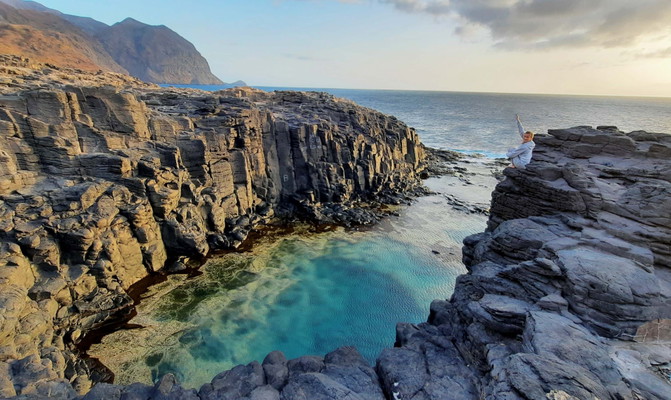
Santiago is the largest and most populous island in Cabo Verde (Cape Verde), blending rugged mountains, rich cultural heritage, and beautiful coastal towns. Home to the nation’s capital and its oldest settlement, Santiago offers a dynamic mix of history, music, cuisine, and outdoor adventure.
Santiago Island is a perfect introduction to Cabo Verde’s diversity—offering a fusion of history, nature, and vibrant culture all in one place.
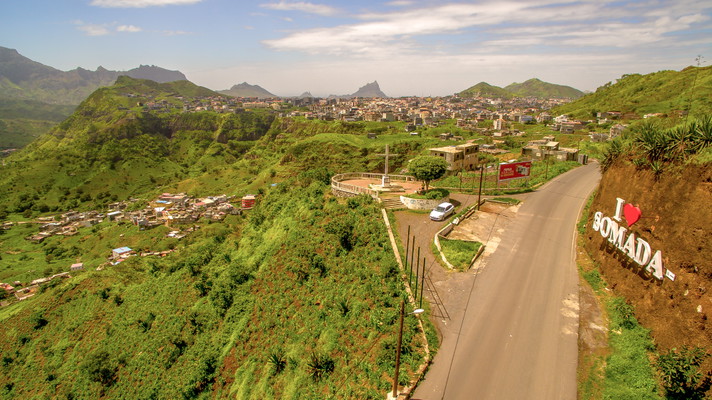
Explore Praia, Cabo Verde’s vibrant capital, with its colonial-era Plateau district, lively markets like Mercado de Sucupira, and seaside promenades.
Visit the UNESCO-listed Cidade Velha, the first European colonial settlement in the tropics, with sites like the Fortaleza Real de São Filipe, Pillory Square, and old stone churches.
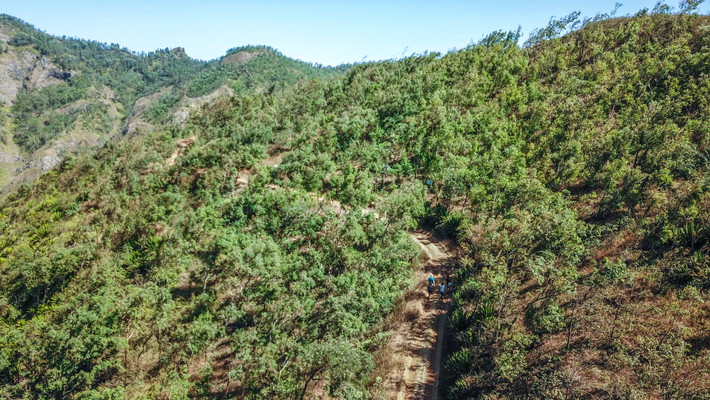
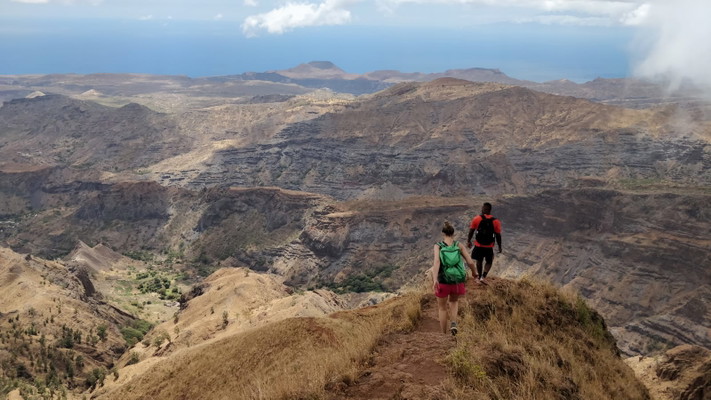
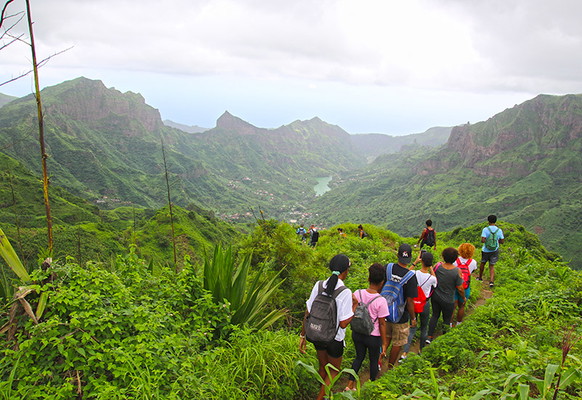
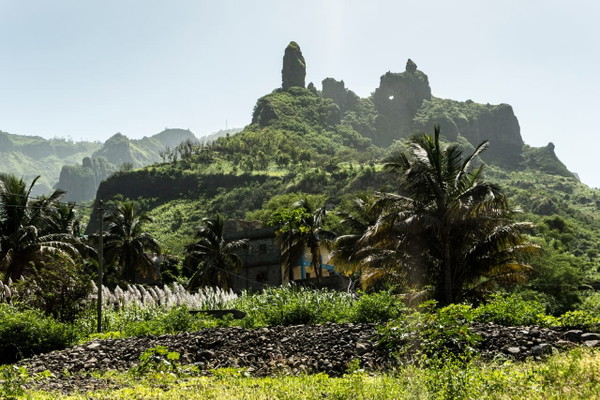
Santiago's interior is mountainous and lush—ideal for hiking through Serra Malagueta Natural Park or to rural villages surrounded by terraced hills and farmland.
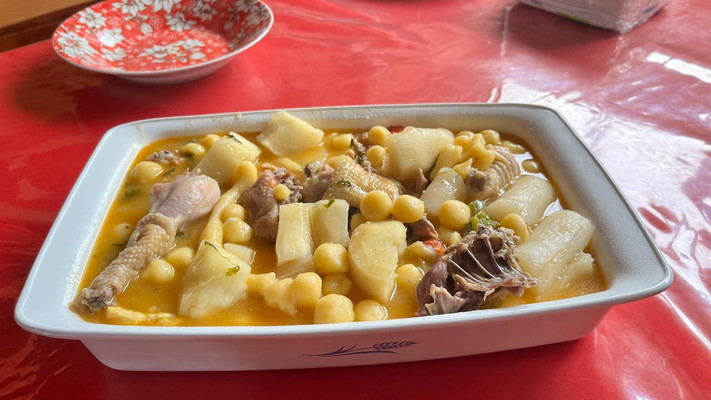
Taste traditional Cape Verdean dishes like cachupa (a slow-cooked stew), fresh seafood, and tropical fruits, often served in family-run taverns or beachside restaurants.
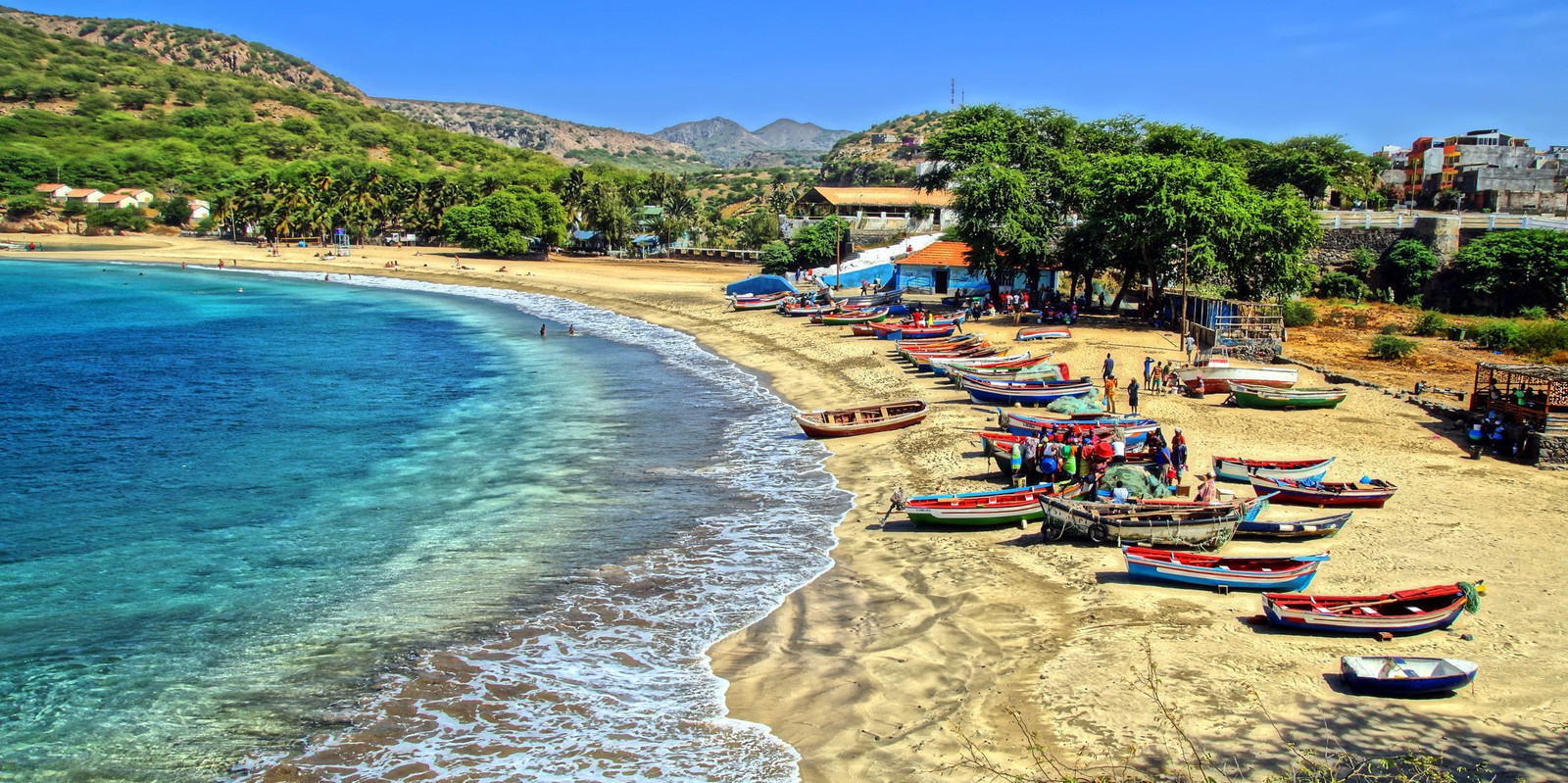
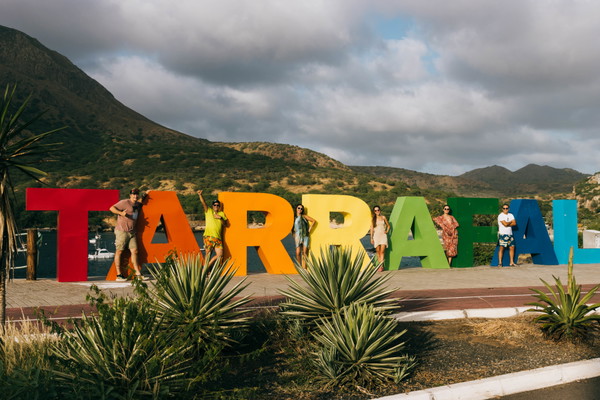
Relax on the soft sands and calm turquoise waters of Tarrafal Beach, a favorite for swimming, snorkeling, and laid-back beach days.

Winter in Santiago is dry and mild, with temperatures ranging from 70°F to 80°F (21°C to 27°C). Rainfall is scarce during these months, and the northeast trade winds create cooler evenings. This is a great time for hiking in Serra Malagueta or exploring historic Cidade Velha without the heat or crowds. The festive season adds cultural charm, with lively music and community celebrations.

Spring continues the dry season, with sunny skies and slightly warmer temperatures as the months progress. With little rainfall, this is an ideal time for beach outings along the coast or day trips into the interior. Tourist activity remains moderate, allowing for a relaxed pace to experience Santiago’s cultural and natural attractions. The clear weather also makes it a good season for birdwatching and photography.

Summer on Santiago is hot, with average highs in the mid-80s °F (29°C) and rising humidity. July and August mark the beginning of the rainy season, though showers are usually short-lived and localized. This is the peak of cultural activity on the island, with music festivals and celebrations energizing the streets. It’s also a productive season for agriculture, bringing green life to the landscape, especially in the mountainous regions.

Autumn is the wettest time of year, especially in September. While rain can affect outdoor plans, the scenery becomes especially lush and vibrant. Temperatures remain warm in the 70s and 80s °F (24°C to 30°C), and the countryside thrives with greenery. By November, rainfall decreases, making it a good time to enjoy both the tail end of the green season and fewer tourists before winter arrivals begin.